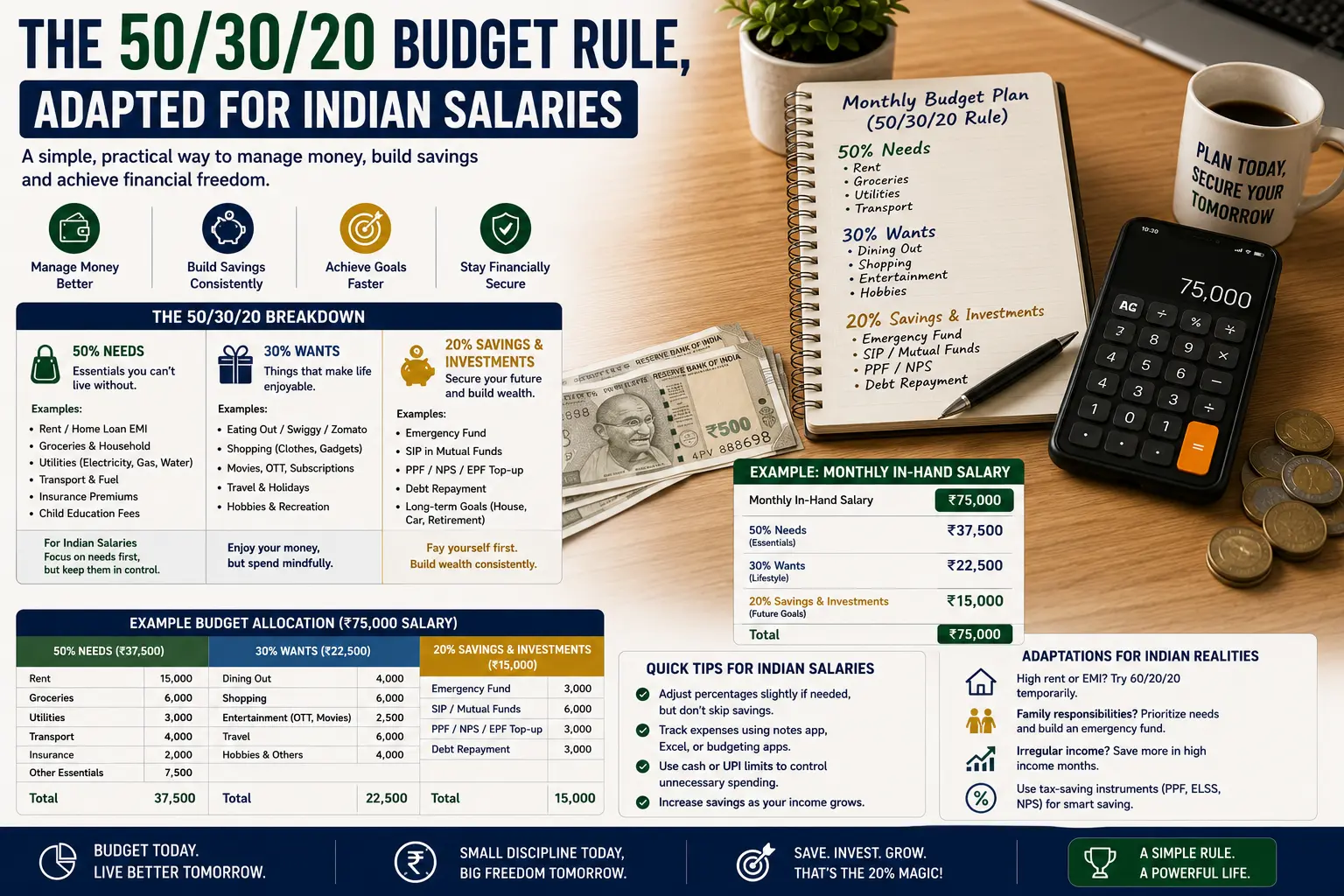
The 50/30/20 rule splits take-home pay into 50% needs, 30% wants and 20% savings. It survives in every personal-finance book because it needs no app, no spreadsheet and no discipline beyond three numbers. But Indian salaries bring their own arithmetic — higher rent-to-income ratios in metros, family remittances, and EMI-first banking culture. Here is the rule, re-worked for what Indian paycheques actually look like.
The rule on three real Indian salaries
| Take-home | Needs (50%) | Wants (30%) | Savings (20%) |
|---|---|---|---|
| ₹35,000 | ₹17,500 | ₹10,500 | ₹7,000 |
| ₹70,000 | ₹35,000 | ₹21,000 | ₹14,000 |
| ₹1,20,000 | ₹60,000 | ₹36,000 | ₹24,000 |
That ₹14,000 on a ₹70,000 salary compounds to about ₹1.68 lakh a year — and at 12% in a SIP with 10% annual step-ups, crosses ₹1 crore in roughly 17 years. The rule’s power is not precision; it is that 20% starts on day one.
Where the textbook breaks in India
Metro rent eats the 50%
A 1BHK in Bengaluru or Mumbai rents at ₹18,000–35,000 — 35–50% of a ₹60–70k salary before food or transport. If your needs start above 55%, don’t abandon the framework; switch to 60/25/15 and work the structural levers (shared housing, closer commute, negotiating rent at renewal) rather than starving groceries.
EMIs are needs; extra EMIs are savings
The compulsory EMI is a need (miss it and there are consequences). Any extra prepayment belongs in the savings bucket — it builds net worth by destroying interest. Track your total with the Debt-to-Income Calculator.
Family remittances
Sending ₹5,000–15,000 home monthly is neither a "want" nor an Indian-budgeting luxury — treat committed family support as a need, and budget honestly around it.
The India-specific bucket list
What goes where, concretely:
- Needs (50%): rent/EMI, utilities, groceries, commute, insurance premiums (term + health — non-negotiable), school fees, family support.
- Wants (30%): eating out, Swiggy/Zomato, OTT subscriptions, travel, gadgets, gifts beyond obligation.
- Savings (20%): emergency fund (until 3–6 months of expenses), then EPF top-ups / PPF / SIPs, extra loan prepayment, goal funds. Park the emergency slice in a liquid fund or FD — the Emergency Fund Calculator sizes it for your fixed expenses.
A month on the rule: ₹70,000 salary, Bengaluru
Priyank’s actual month: rent ₹20,000 + groceries/utilities ₹9,000 + commute ₹4,000 + insurance ₹2,500 = ₹35,500 needs (51%). Wants: ₹19,500 — dining ₹8,000, OTT ₹800, travel fund ₹7,000, misc ₹3,700 (28%). Savings: ₹15,000 — SIP ₹10,000 + PPF ₹5,000 (21%). The rule holds even at Bengaluru rents because his EMI is zero — add a ₹15,000 bike+phone EMI and needs hit 72%, and the 60/25/15 fallback or a payoff plan (see the Debt Payoff Planner) becomes the honest budget.
From ratios to systems
Ratios only work when money moves automatically. Three systems that fit Indian banking:
- Pay-day sweep: standing instruction on salary day to move 20% to a separate account/SIP before anything else.
- Two-account split: salary account for needs+EMIs, second account funded with the wants budget — card declines enforce the 30% better than willpower.
- Annual step-up: each increment, direct half the raise to savings — the 20% becomes 25% without lifestyle pain. That single habit is worth more than any budgeting app.