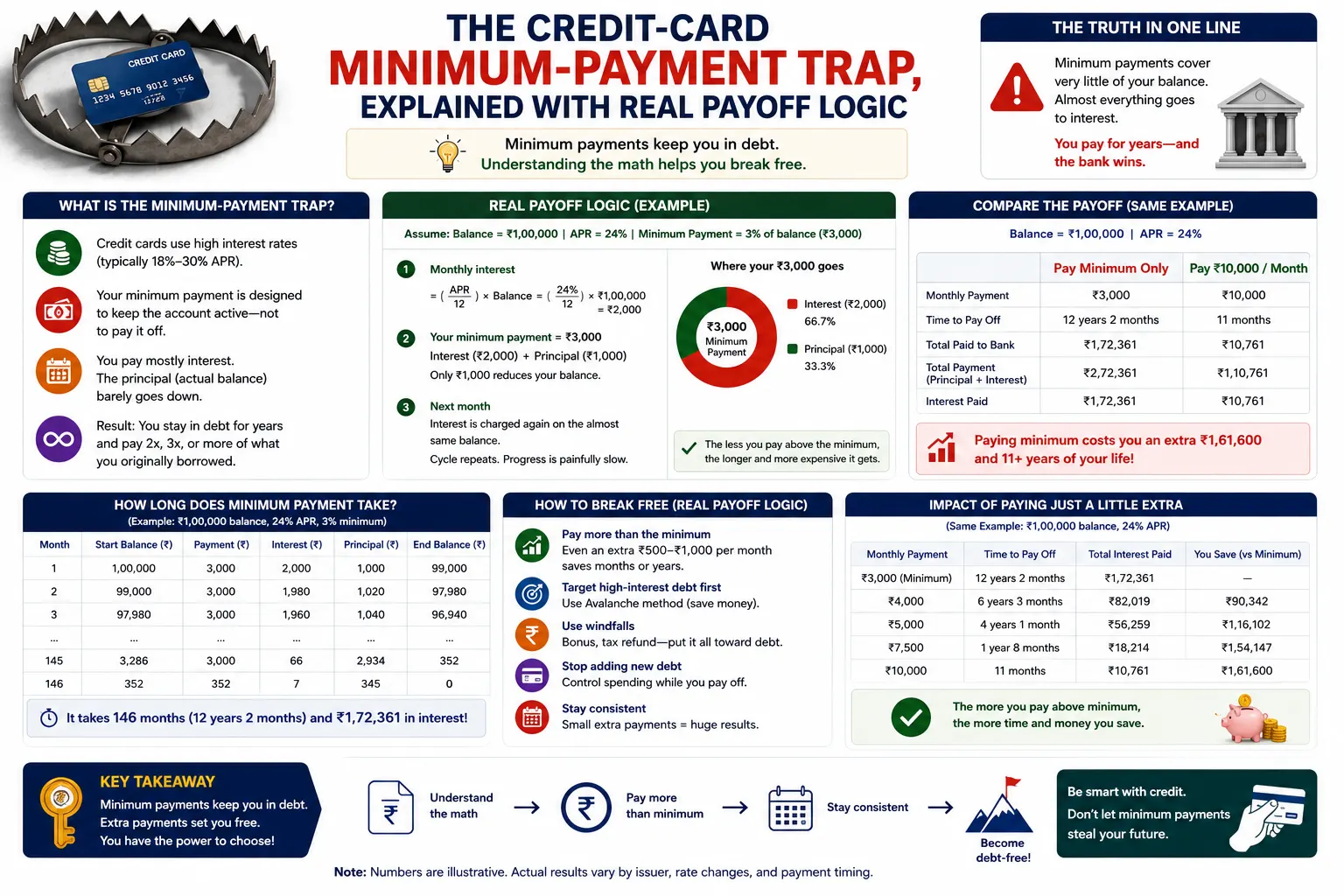
What the minimum really does
The minimum is typically a small percentage of the outstanding balance or a fixed amount, whichever is higher. It avoids an immediate missed payment, but most of the balance can remain exposed to high card APR.
Why the balance can feel almost frozen
As you pay a small portion down, the required minimum can also decline. That moving target may make the account look manageable while principal barely falls. Fixed payments above the minimum attack the balance more directly.
Consider a ₹50,000 balance at 36% APR (about 3% per month, typical for many Indian cards) with a 5% minimum:
| Month | Opening balance | Interest (3%) | Minimum (5%) | Principal reduced |
|---|---|---|---|---|
| 1 | ₹50,000 | ₹1,500 | ₹2,500 | ₹1,000 |
| 6 | ₹44,805 | ₹1,344 | ₹2,240 | ₹896 |
| 12 | ₹39,025 | ₹1,171 | ₹1,951 | ₹780 |
After a full year of paying only the minimum, you would have paid over ₹27,000 yet still owe nearly ₹39,000 — the balance fell barely 22%.
New purchases change the math
When a balance is revolved, the usual grace period may not apply to new spends. Purchases can begin costing interest quickly, so separating spending from a repayment card is important.
A stronger repayment routine
Fix a monthly amount, automate it above the minimum, stop adding new purchases where possible, and review the issuer’s APR, fees and payment-allocation rules every statement cycle.
Sources and further reading
Financial disclaimer: This guide is educational and does not constitute investment, tax, credit or legal advice. Product terms, regulations, rates, taxes and personal circumstances change; verify the latest offer and consult a qualified professional where appropriate.