Start with every required payment
Before choosing a strategy, list each debt with its balance, interest rate, fees and minimum payment. Missing a minimum can add late fees and damage your credit record, so a payoff plan should always pay required instalments first.
When avalanche is usually cheaper
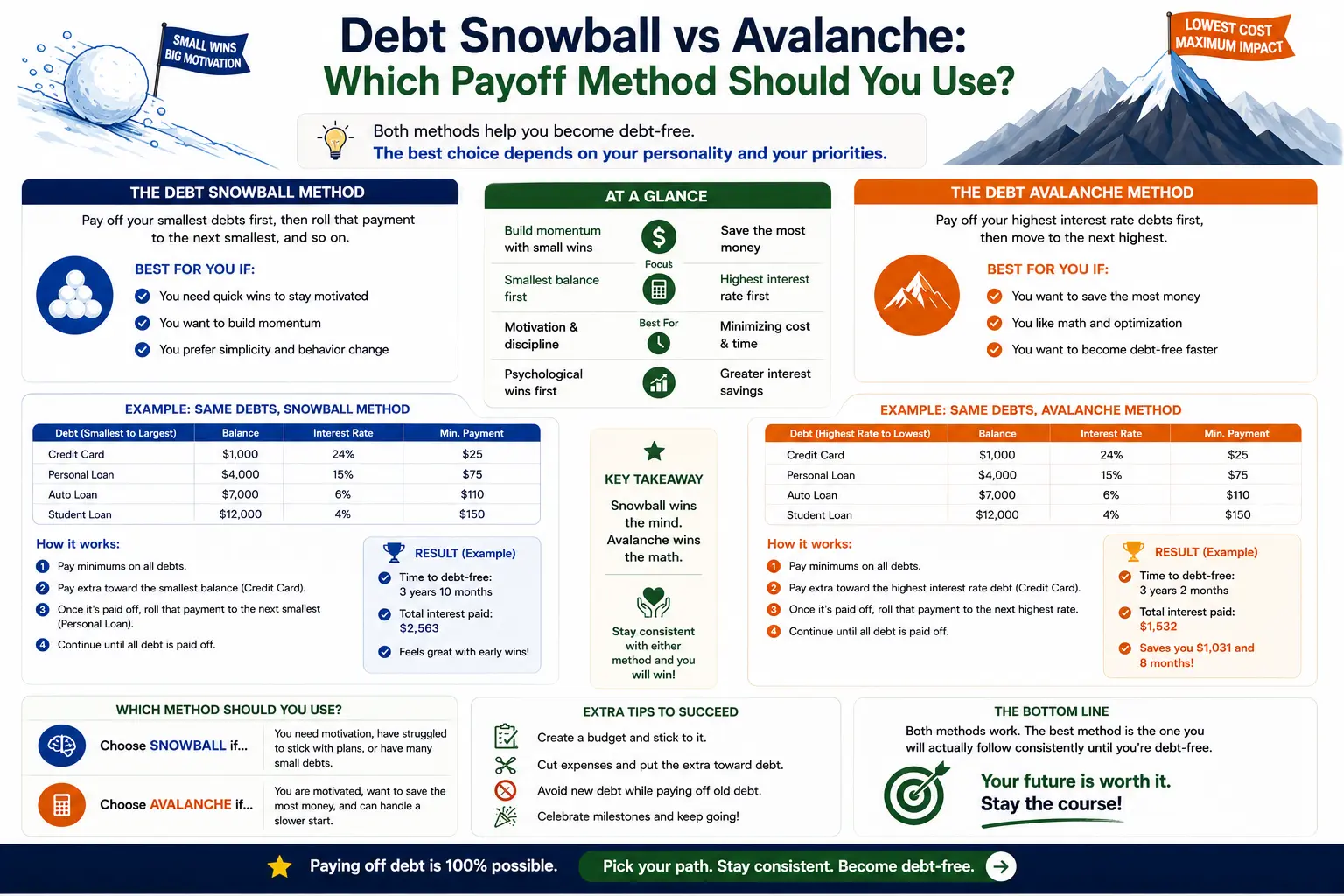
Avalanche sends surplus money to the highest-interest balance. In India, that often means credit-card debt or a high-cost personal loan before a lower-rate education or car loan. Because costly balances shrink sooner, the total interest bill is usually lower.
When snowball can help behaviour
Snowball targets the smallest balance. It may cost more mathematically, but early account closures can help people stay committed — especially when multiple apps, cards and BNPL-style dues feel overwhelming.
A side-by-side example
Suppose you owe ₹80,000 on a credit card at 36%, ₹1.5 lakh on a personal loan at 14%, and ₹2.4 lakh on a used-car loan at 9%. You can spare ₹8,000 beyond minimums every month:
| Method | First extra target | Indicative result |
|---|---|---|
| Avalanche | Credit card (36%) | Lowest lifetime interest; slowest early "win" |
| Snowball | Credit card (smallest balance in this example) | Faster first closure; slightly more interest if card were not also smallest |
In this particular example both methods hit the same first target. The real difference appears when your smallest balance is not your costliest rate — avalanche then saves more money, snowball clears an account sooner.
Choose a sequence you can sustain
A practical approach is a modified avalanche: clear dangerous high-AAPR revolving debt first, then use snowball milestones for motivation. Review the plan when income, rates or balances change.
Sources and further reading
Financial disclaimer: This guide is educational and does not constitute investment, tax, credit or legal advice. Product terms, regulations, rates, taxes and personal circumstances change; verify the latest offer and consult a qualified professional where appropriate.