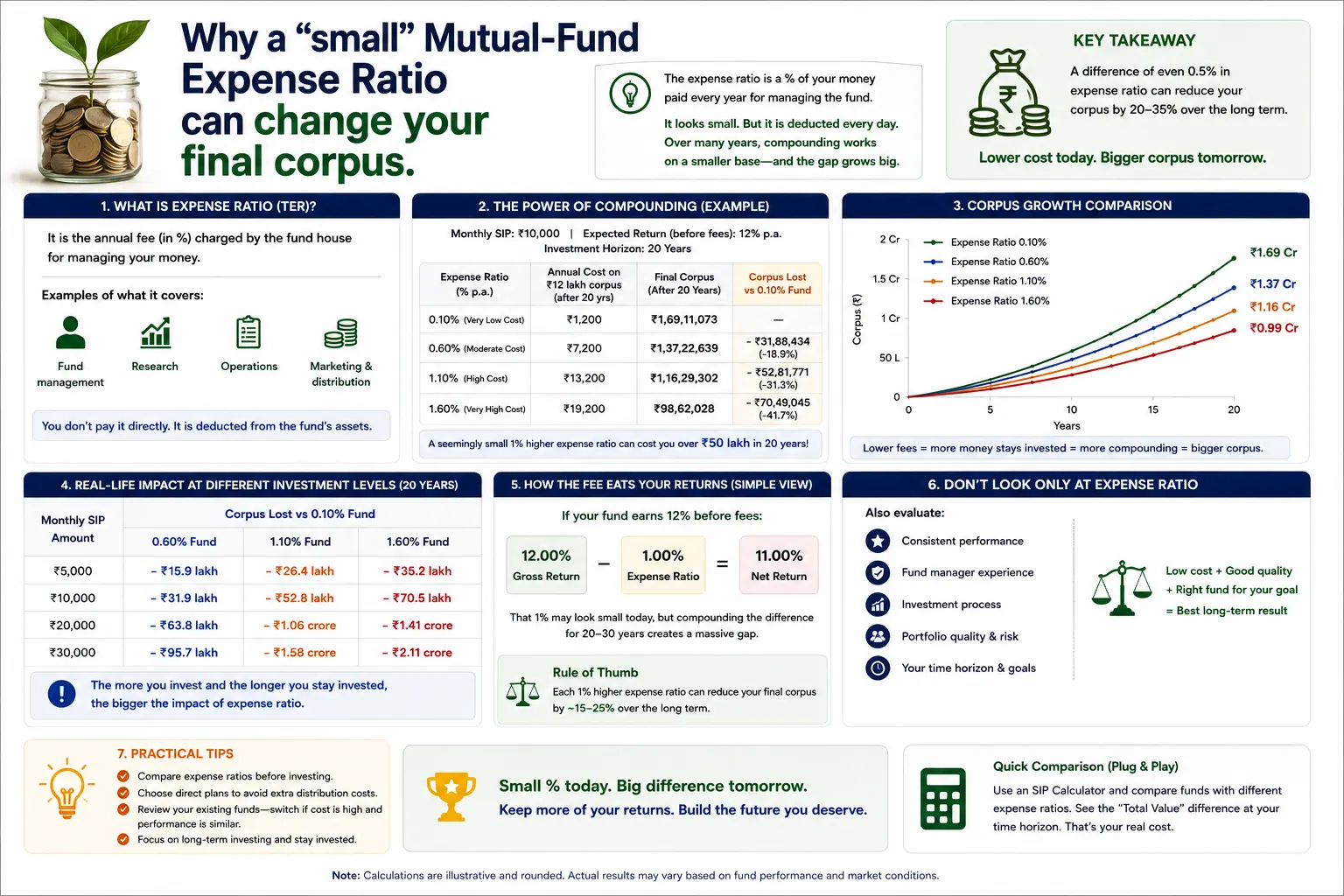
Expense ratio is recurring
The published expense ratio covers fund management and operating costs within regulatory limits. It is reflected in the NAV, but investors should still compare it because recurring charges reduce the return retained by the portfolio.
How a "small" 1% compounds
Invest ₹10,000 a month for 25 years. At a gross 12% return before fees, here's what different expense ratios do to the final corpus:
| Net annual expense | Net return | Corpus after 25 years | Loss vs zero-fee |
|---|---|---|---|
| 0.3% (index, direct) | 11.7% | ₹1.56 crore | ₹5 lakh |
| 1.0% (active, direct) | 11.0% | ₹1.40 crore | ₹21 lakh |
| 2.0% (active, regular) | 10.0% | ₹1.19 crore | ₹41 lakh |
A 2% recurring fee over 25 years can cost over ₹40 lakh on the same monthly investment — even though the fee feels tiny each year.
Regular, direct and total cost
Direct plans generally have lower recurring expense than otherwise identical regular plans because distributor commission is not included. Low expense is useful, but fund objective, mandate, risk, tax and benchmark fit still matter.
Look beyond a single number
Compare the fund against its stated benchmark, examine tracking difference where relevant, and distinguish active funds from index funds. A cheap unsuitable holding is not a good investment choice.
Use costs as one decision filter
Expense ratio alone should not drive every switch, but an investor comparing similar long-term exposure should understand the difference a recurring fee can make over decades.
Sources and further reading
Financial disclaimer: This guide is educational and does not constitute investment, tax, credit or legal advice. Product terms, regulations, rates, taxes and personal circumstances change; verify the latest offer and consult a qualified professional where appropriate.