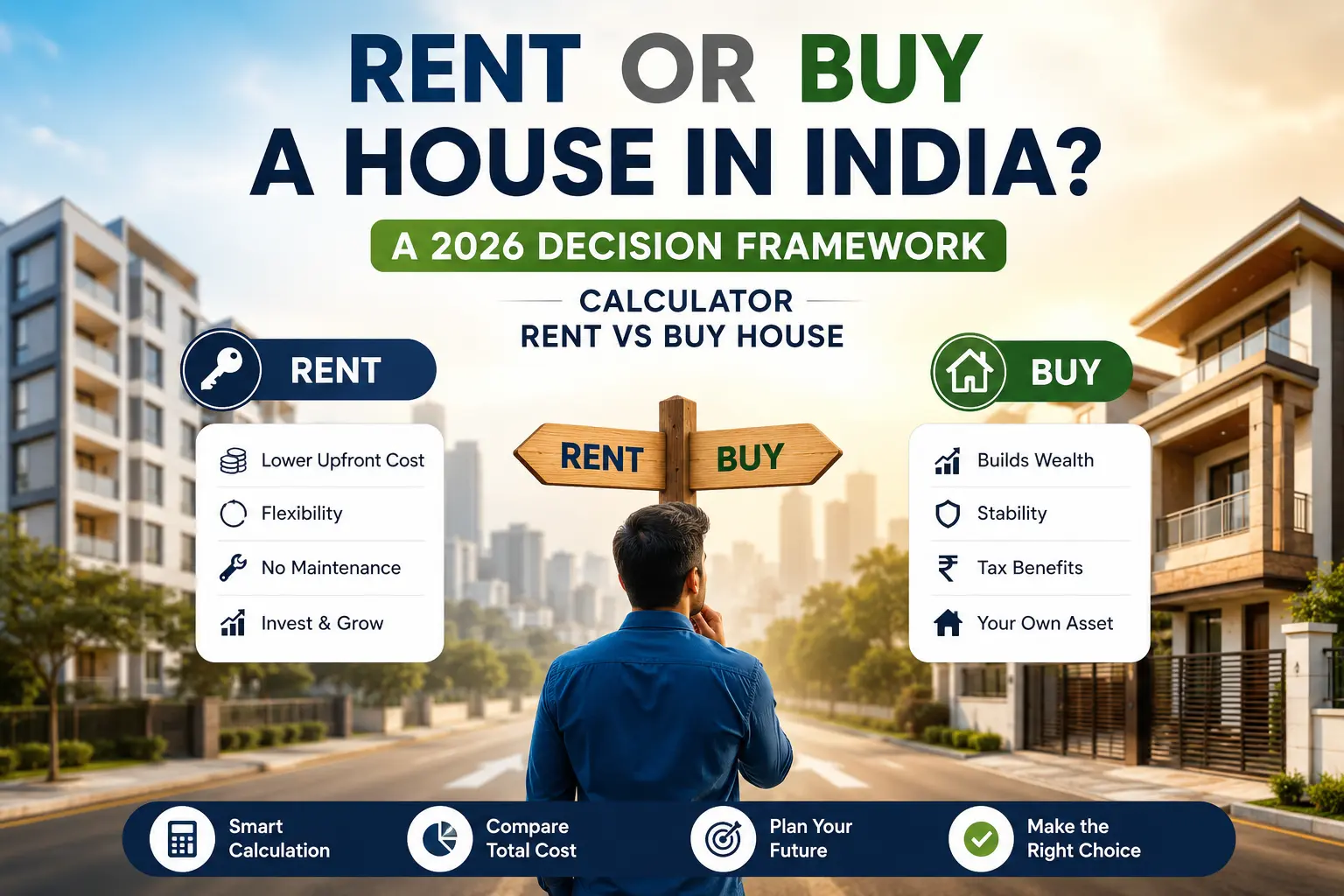
A home can offer stability, control and the satisfaction of ownership. It can also concentrate a large share of your net worth in one asset and reduce flexibility. The better choice depends on how long you expect to stay, the price-to-rent relationship, your down payment, loan affordability and the value you place on mobility.
Do not compare EMI with rent alone
The EMI is only one part of buying. Add the down payment, stamp duty and registration, interiors, maintenance, property tax, insurance and the opportunity cost of the money tied up. On the rent side, account for expected rent increases and what you can do with the down payment and monthly surplus if you invest it.
- Buy path: property value minus outstanding loan and ownership costs.
- Rent path: investment value of down payment and any EMI-versus-rent surplus, minus rising rent paid.
First test affordability
Ownership is healthier when the down payment does not empty your emergency fund and the EMI leaves room for insurance, retirement savings, child goals and everyday life. Do not let the lender's maximum eligibility become your personal affordability limit.
Consider buying when
- You expect to stay in the same area for at least seven to ten years.
- You have a stable income, emergency reserve and adequate insurance.
- The EMI is comfortable after all recurring household commitments.
- The home fits your family, commute and lifestyle without an unrealistic stretch.
Consider renting when
- Your work or family situation may change soon.
- Comparable rents are low relative to property prices.
- Buying would halt retirement and emergency savings.
- You can invest the difference with discipline for a long horizon.
Use assumptions, not predictions
No calculator can guarantee property appreciation or investment returns. Use conservative assumptions, test a few scenarios and focus on whether the decision remains comfortable if rates, rents or income change. A home you can hold calmly is usually a better decision than an ambitious property that creates monthly stress.
The non-financial questions matter too
School continuity, proximity to family, ability to customise your home and emotional security are legitimate benefits of buying. So are the freedom to move for a better job, live in a different neighbourhood and avoid maintenance surprises. Put these factors beside the spreadsheet rather than pretending they do not exist.