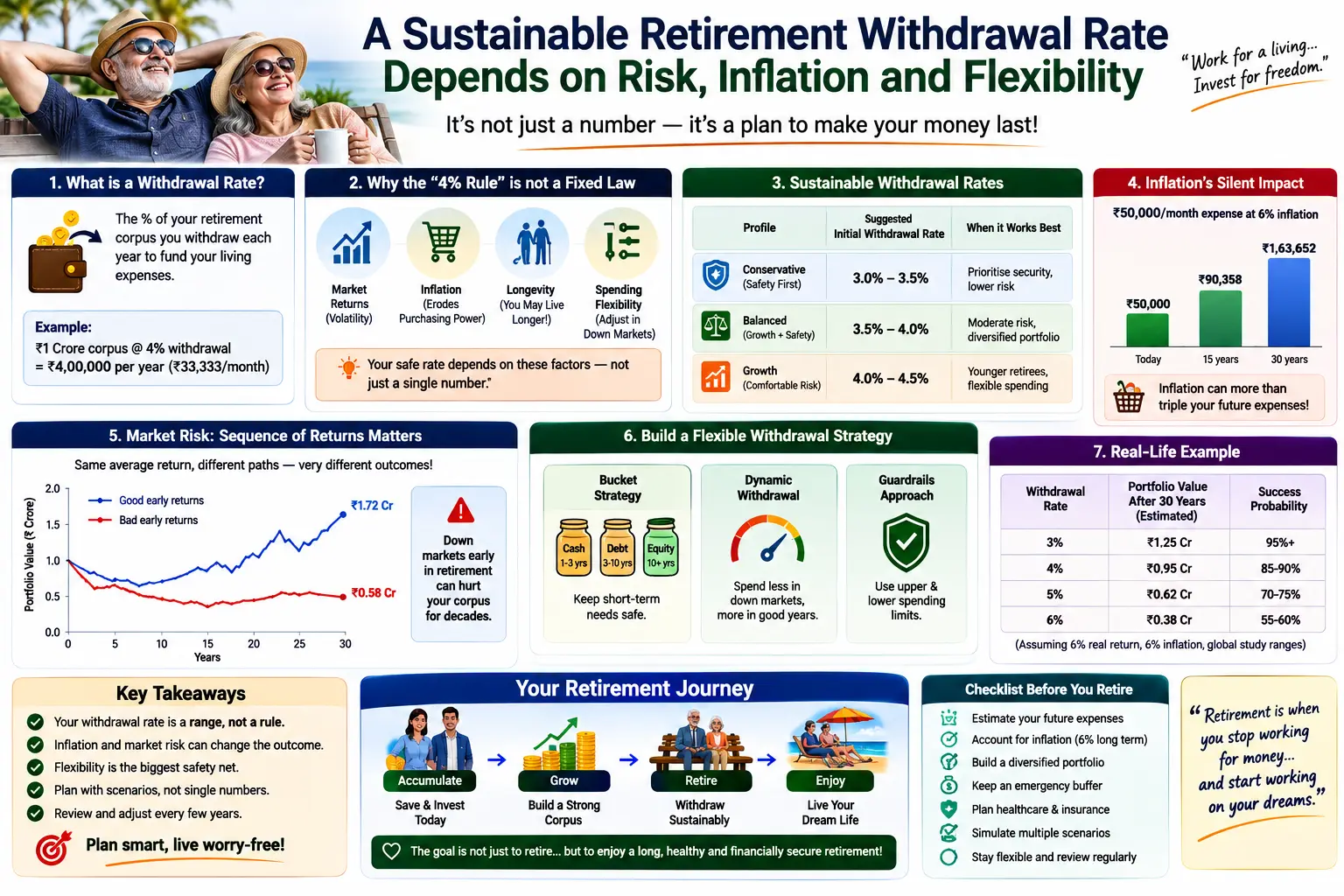
The withdrawal rate is only a starting point
First-year withdrawal divided by beginning corpus is easy to calculate, but the answer changes with asset allocation, taxes, longevity and spending flexibility. A lower starting rate generally creates more room for bad outcomes.
A ₹2-crore illustration at different rates
Assume a ₹2 crore corpus with 6% average portfolio return and 6% inflation on withdrawals. How long the money may last:
| Withdrawal rate | Year-1 withdrawal | Indicative years to last (inflation-adjusted) |
|---|---|---|
| 3% | ₹6 lakh | 30+ years |
| 4% | ₹8 lakh | ~25–28 years |
| 6% | ₹12 lakh | ~15–18 years |
| 8% | ₹16 lakh | ~11–13 years |
These are rough figures: actual years depend on the return–inflation spread and fees, and on how returns land through time.
Inflation can move the goalposts
If withdrawals rise with inflation, pressure on the portfolio grows every year. India-specific planning should consider essential expenses separately from flexible or one-off costs.
Sequence risk can hurt early retirees
Weak market returns early in retirement can damage a portfolio more deeply than the same returns later. Holding an emergency buffer, reducing spending after downturns or using a pension/annuity sleeve may help manage that risk.
Review retirement income every year
A responsible plan is not static. Recalculate when portfolio value, withdrawal needs, age, inflation, interest rates, pensions or family obligations change.
Sources and further reading
Financial disclaimer: This guide is educational and does not constitute investment, tax, credit or legal advice. Product terms, regulations, rates, taxes and personal circumstances change; verify the latest offer and consult a qualified professional where appropriate.